Like a coin with two faces, the story of Hellelil and Hildebrand holds both love and tragedy.
Certain moments in life quietly invite us not to rush forward, especially in matters of love. They urge us to pause, linger, and wait.
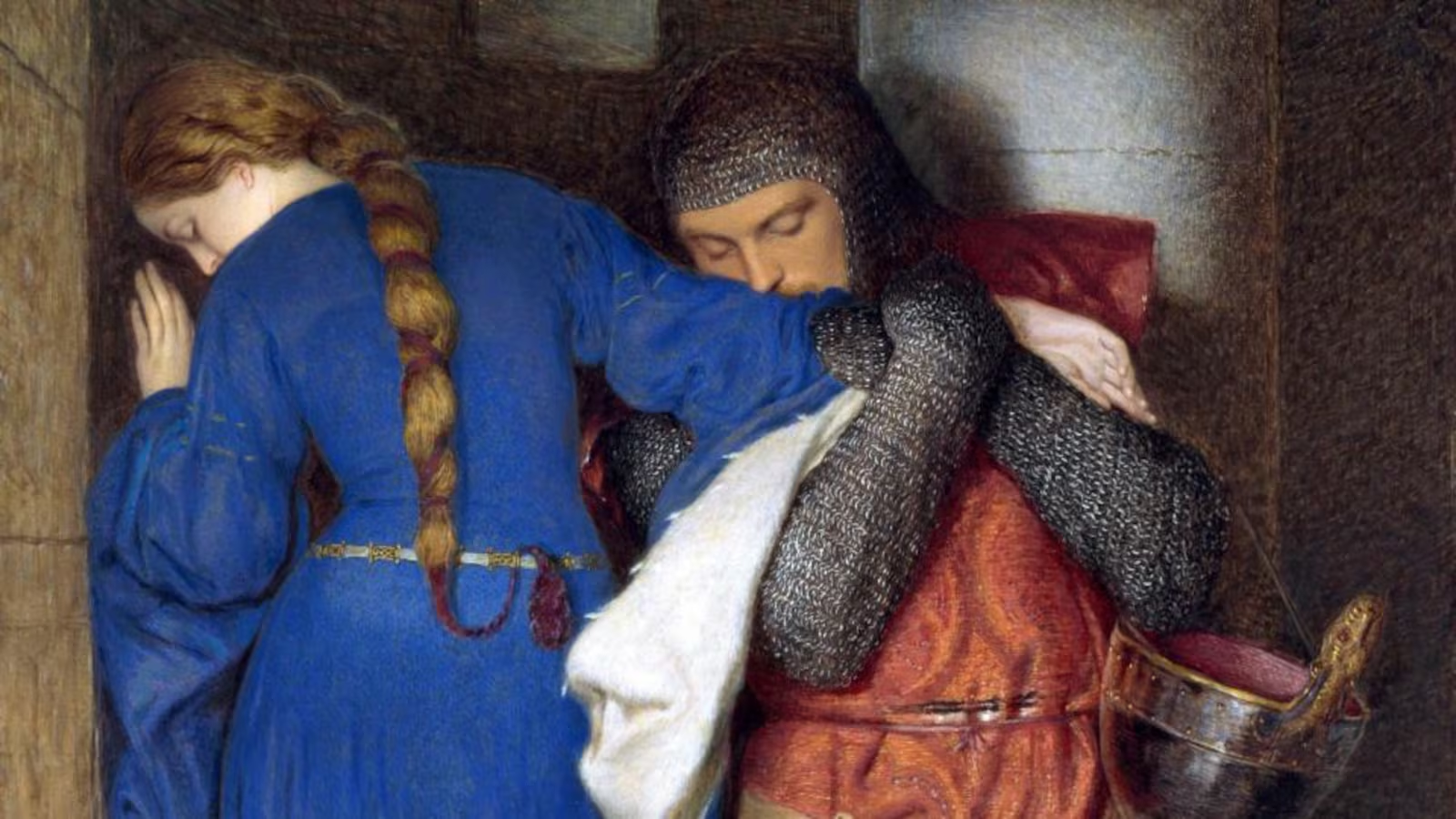
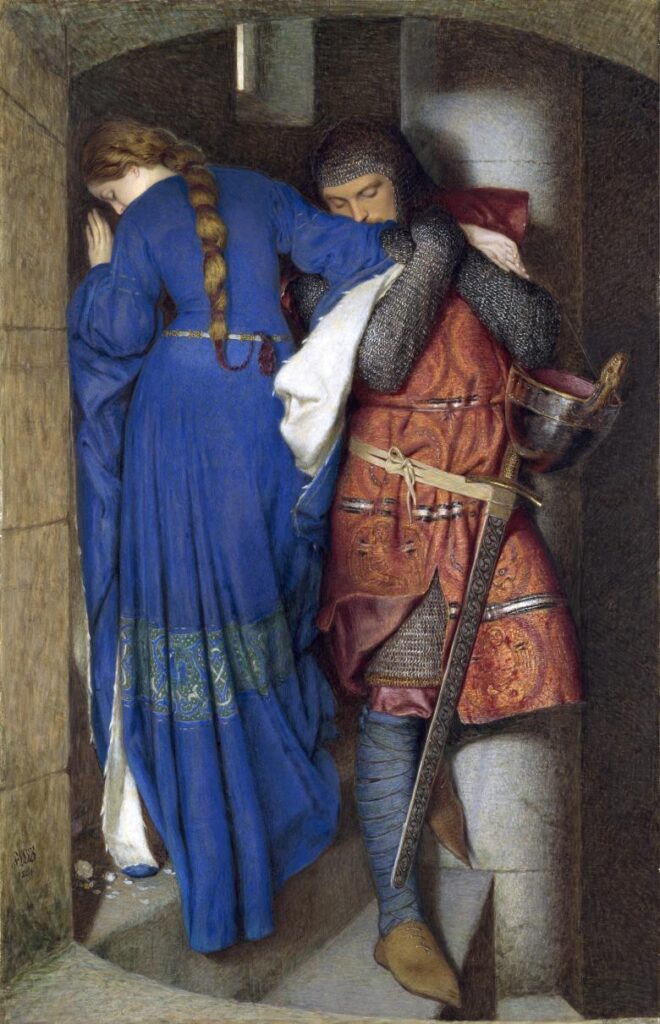
In The Meeting on the Turret Stairs, two figures stand on a narrow stone staircase: a noblewoman in a blue gown and her bodyguard in chainmail. Their bodies lean toward one another yet appear to drift apart.
https://share.google/vbWwYlXNL0E1GtuEc
Drawing us into an intensely private moment, making us feel like intruders for having a glimpse.
The painting does not tell us whether this is their first or last meeting; it leaves that question open.
The Art that holds the detail
The spiral staircase, an archer’s loop window, and flower petals scattered across the stone steps.
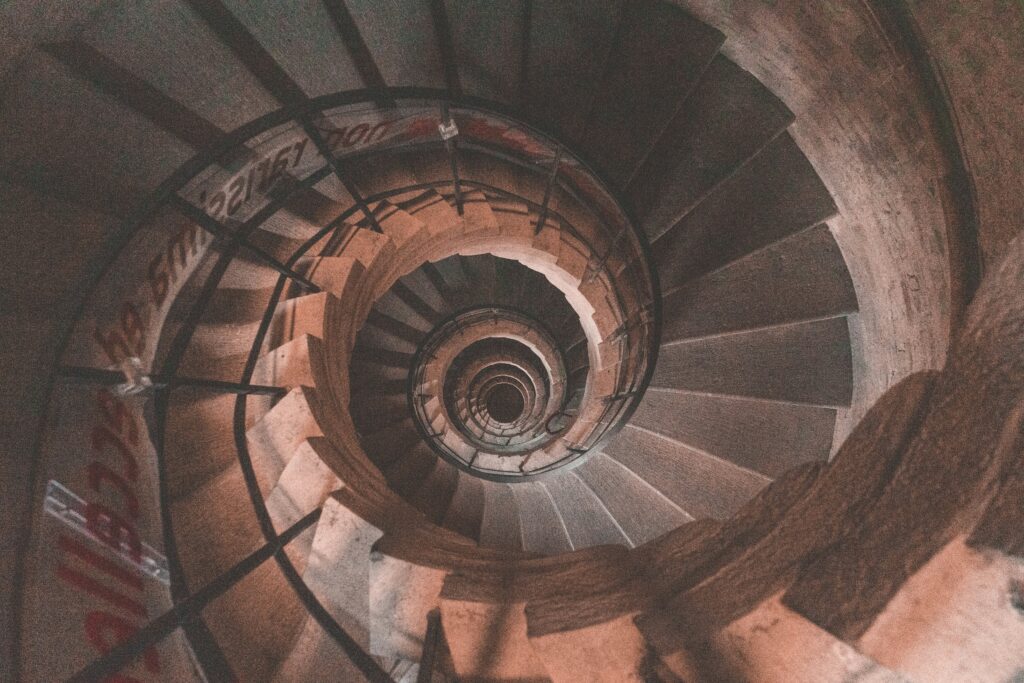
None of these details exists merely for decoration. It illustrates the fleeting love between the two figures, that is considered forbidden.
These elements guide our eyes through the painting, but more importantly, they suggest the ephemeral nature of the lovers’ happiness.
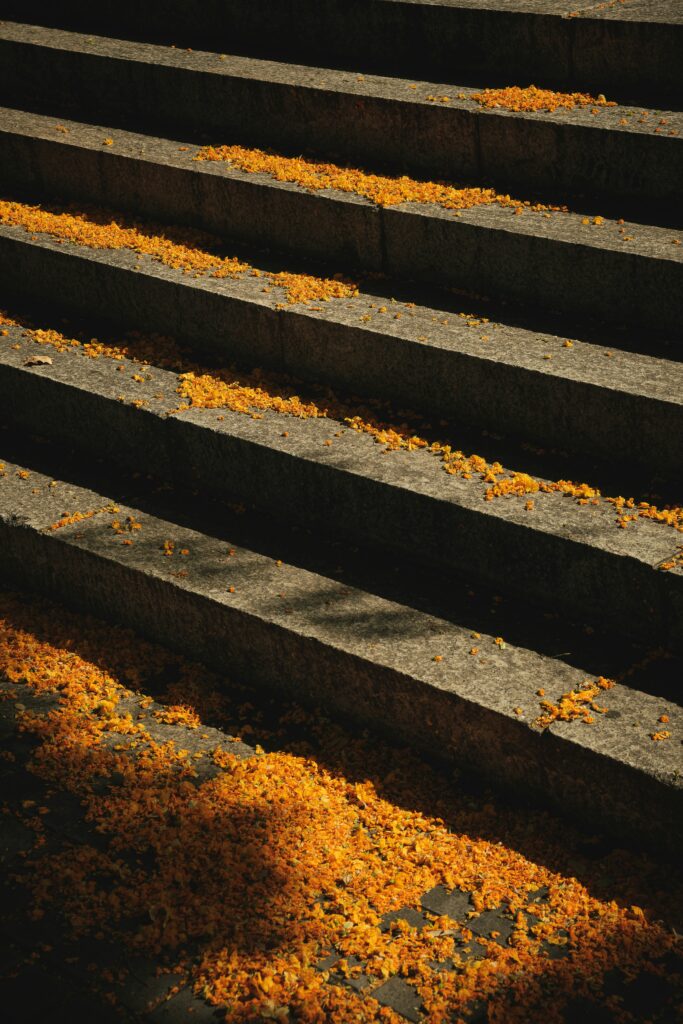
The petals resting lightly on the stairs mirror the tenderness of love itself: delicate, temporary, and easily crushed. The hard stone beneath their feet reflects the harshness of the world around them—society, duty, and hierarchy.
Resistance as Awareness
The resistance they share is not defiance; it is awareness. It reflects a love that understands the cost of moving forward and chooses stillness instead.

Not out of fear or a lack of courage, but because it recognizes that some choices, once made, cannot be undone.
In this moment, love does not rushes; it waits.
We are accustomed to stories where love demands action—confession, pursuit, arrival. We are taught that if love is genuine, it must be proven through some sort of movement.

But this painting suggests something quieter.
What if love does not always need actions to be real?
What if it can exist fully—even in silence?
Staircase—between What Was and What Will Be
The staircase is not a destination; it is a passage. It continues in its ascent and descent, representing the transition between levels, choices, and the past and future.
In silence, the figures meet in a place indifferent to both of their journeys that was never meant to be occupied for long. And yet, they linger.

They do not embrace or kiss; he leans close enough to breathe in her scent, knowing it may be the last time.
Perhaps they know that this moment cannot last.
The Story
The painting is from a medieval Danish ballad translated by Burton’s friend Whitley Stokes, which tells the story of Princess Hellelil, who fell in love with her personal guard, Hildebrand, the Prince of Engelland.

Her father disapproved of their relationship and ordered her seven brothers to kill the young prince. In the ensuing battle, Hildebrand killed six of her brothers, but Hellelil cried out, asking him to spare the youngest.
Hildebrand hesitates and gets mortally wounded by the last brother, and dies.
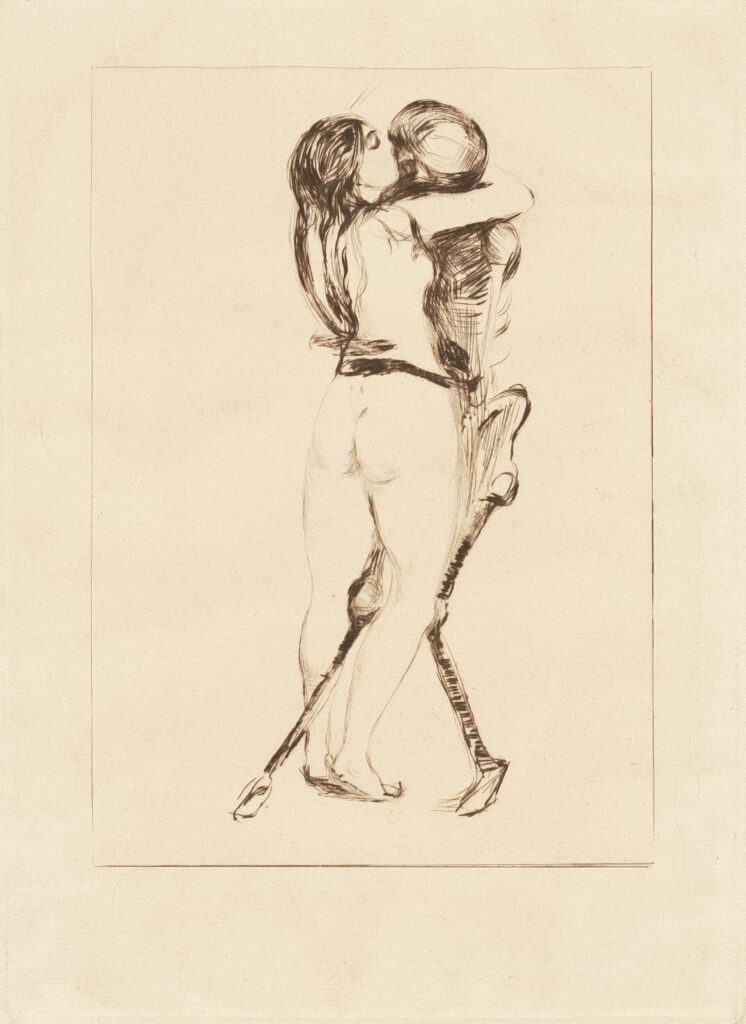
Hellelil dreamt of Hildebrand day and night. In memory, they met again and again—across time, across worlds, across the limits of reality.
When grief finally consumed her, she followed him beyond the world that had once torn them apart.
Burton chose to imagine a romantic moment from the story before its tragic conclusion: the final meeting of the two lovers.
Why this feels familiar
Most of us have experienced moments like this—a feeling we did not act on, a word left unsaid, a hand we did not reach for.
Not always out of fear, but because we understood. We understood the timing and the consequences, realizing that some emotions are preserved by restraint.
The painting does not mourn what does not happen, nor does it romanticize tragedy; it simply observes.
Many of us have known this kind of love long before we could name it—echoed in films like Titanic (1997), and felt most deeply when My Heart Will Go On seemed to carry a promise that love, once known, never truly fades.
What Love leaves behind
Over time, we begin to realize that love, in its truest and most natural form, serves many purposes. It is not only about romance, soulmates, or lifelong companionship.
The loves of our past—the unfinished, untested, un-lived ones—often appear childish as we seek stability and certainty. Yet, they are the purest, most concentrated forms of feeling we ever experience.
The painting concludes where it began—in a pause. Perhaps that is why it stays with us.
Not every meeting is meant to arrive or depart; Some destined to remain.